

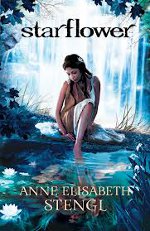
Starflower is the newest entry in a series that is fast becoming one of my favorites. Most of the books I read are intended for YA and older, but a few like the Tales of Goldstone Wood, while great for any age, are being added to my read aloud to the children list. Instead simply retelling specific fairy tales, these books use the traditions and tropes of the genre to tell new stories and as a result are a truly refreshing read.
Starflower itself is something of a standalone and can be easily pick up without needing to read the previous books. The premise is simple and well loved: a dragon has kidnapped the princess, and two suitors must try to rescue her with the understanding that whoever succeeds will win her hand in marriage. But below the surface this book is anything but simple, starting with the fact that the dragon usually looks like a human. The narrative weaves back and forth through several sets of characters providing multiple viewpoints into what ultimately becomes the story of two women who are facing the same evil in very different ways.
The writing style is a little old fashioned as fits the genre but is never hard to follow. It comes across a little like a mash up of George MacDonald and Princess Bride with honor and virtue juxtaposed with a startlingly dry humor. There’s a scene with frogs that’s laugh out loud funny. And there’s “fighting, torture, revenge, giants, monsters, chases, escapes, true love, miracles…” If you start this too late at night, you will be trying to staying awake to finish it.
While I look forward to this being on the family read aloud list, there are some very dark elements to the story which would probably go over the heads of most very small children and be worthy conversation topics with most teenagers, but could be too much for those in between. The most glaring one is the cultural practice of one land which places a curse on all infant girls so that they lose their voices. Blatantly referred to as slaves, they are never permitted the literal ability to speak for themselves. This is a powerful element in the story as one girl escapes to the outside world and begins to walk a different “Path.” However, it could raise questions and concepts grade-school children aren’t ready to cope with.
Beyond that, I can whole-heartedly recommend Starflower as well as the other Goldstone Wood books. There is no bad language or innuendo and even violence is kept to a minimum. They are a particularly good fit for fantasy loving teenagers, though probably leaning a bit more toward being girl books. Definitely don’t be afraid to jump into the series with Starflower, but keep an eye out for the other three books as well.
My thanks to Bethany House for sending me a review copy of Starflower, in return for my honest opinion of this book.